Security and compliance
Passports, selfies and dates of birth are the most sensitive data a business holds. Here is how xiomid keeps them safe, in plain words.
How we protect identity data
What the product does today. No badges we haven’t earned.
Encrypted in transit and at rest
Every page, API call and upload uses HTTPS. Identity data read from documents and face templates are stored encrypted; keys and secrets are sealed with AES-256-GCM.
Private storage for documents and selfies
Photos go straight from the applicant’s device to private storage through short-lived upload links. Storage is never public, and reviewers open media through signed links that expire.
EU or US data region
Each brand chooses where its applicant data and media live: the European Union (Frankfurt) or the United States (Virginia). The region is fixed once chosen.
Retention you control
Set how long media, personal data and abandoned sessions are kept, per brand. Expired data is purged automatically; the minimum KYC record is kept for the AML retention period the law requires.
GDPR and KVKK requests
Access, erasure, rectification and restriction requests with their deadlines, exports as JSON with media, legal holds that pause purging, and a status page where applicants can ask for their data.
Consent on record
Biometric consent is asked before the selfie. Each consent stores the exact text version and its hash, the time, the IP address and the device.
Sealed case records
Decisions are append-only, with the reviewer and the reason. Each check keeps its version, so an old case can be explained as it was decided. Case reports carry a SHA-256 fingerprint of the data they were made from.
An audit trail of who did what
Sign-ins, decisions, settings, keys, webhooks and data requests are recorded in an audit log you can search and export.
Sanctions lists you can audit
UN, EU, OFAC and UK lists, Turkish asset freezes, PEP and adverse media. Every list publishes immutable versions with a checksum, and every screening records which versions it searched.
Roles, two-factor and passkeys
Owners, admins, reviewers and developers. Reviewers see only the brands they are given. Require two-factor sign-in for your team, use passkeys, and add four-eyes review for high-risk cases.
Signed API and webhooks
API requests are signed with HMAC-SHA256 and a timestamp; secrets stay on your server. Webhooks are signed the same way, so your backend can trust them.
Machine checks, with limits
Automated review is advisory: it can send a case to review but never approves a case that failed a hard check. It receives the minimum it needs, under terms that do not keep or train on the data. Faces are matched by measured face similarity, never by the automated review.
Every decision explained
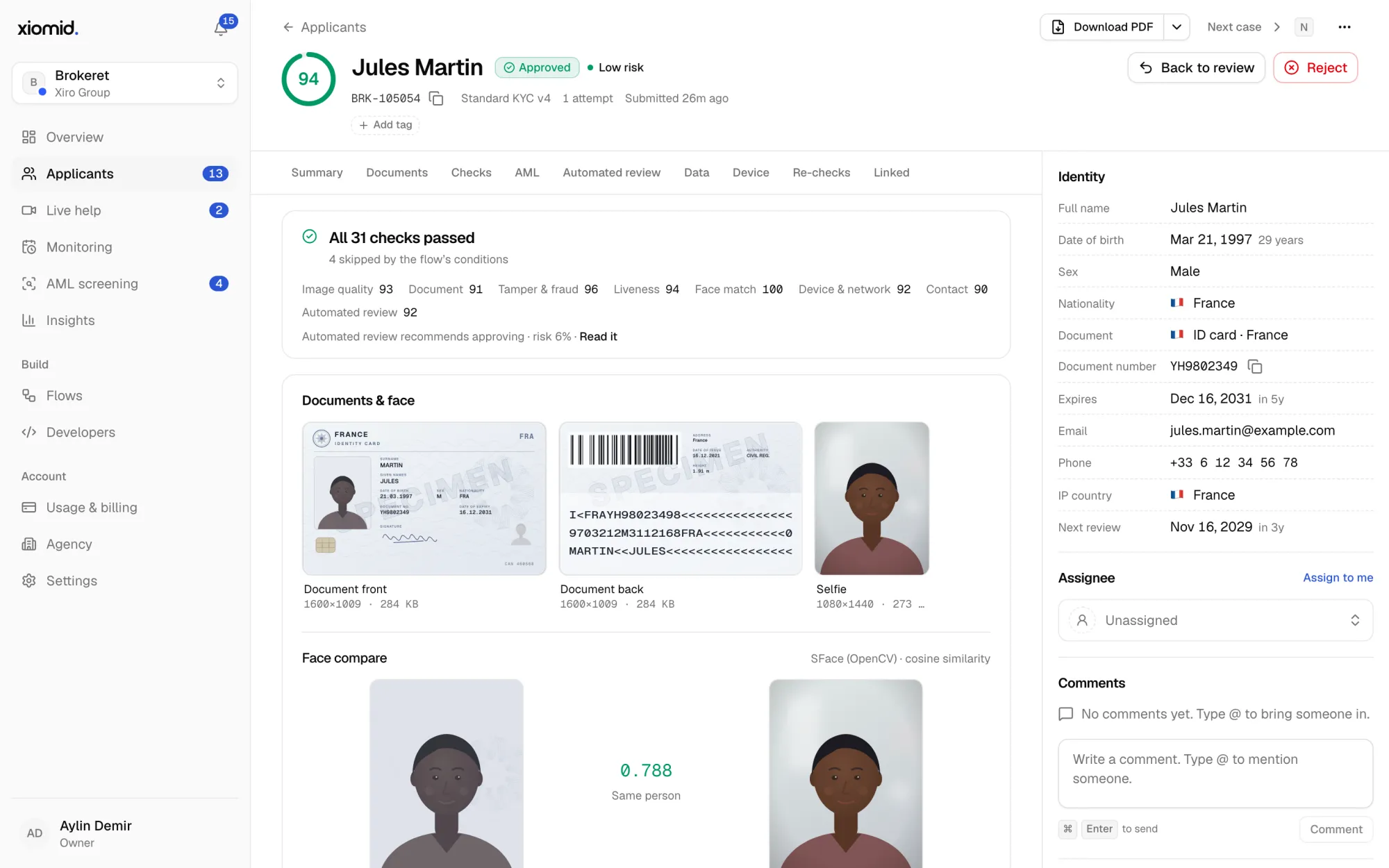
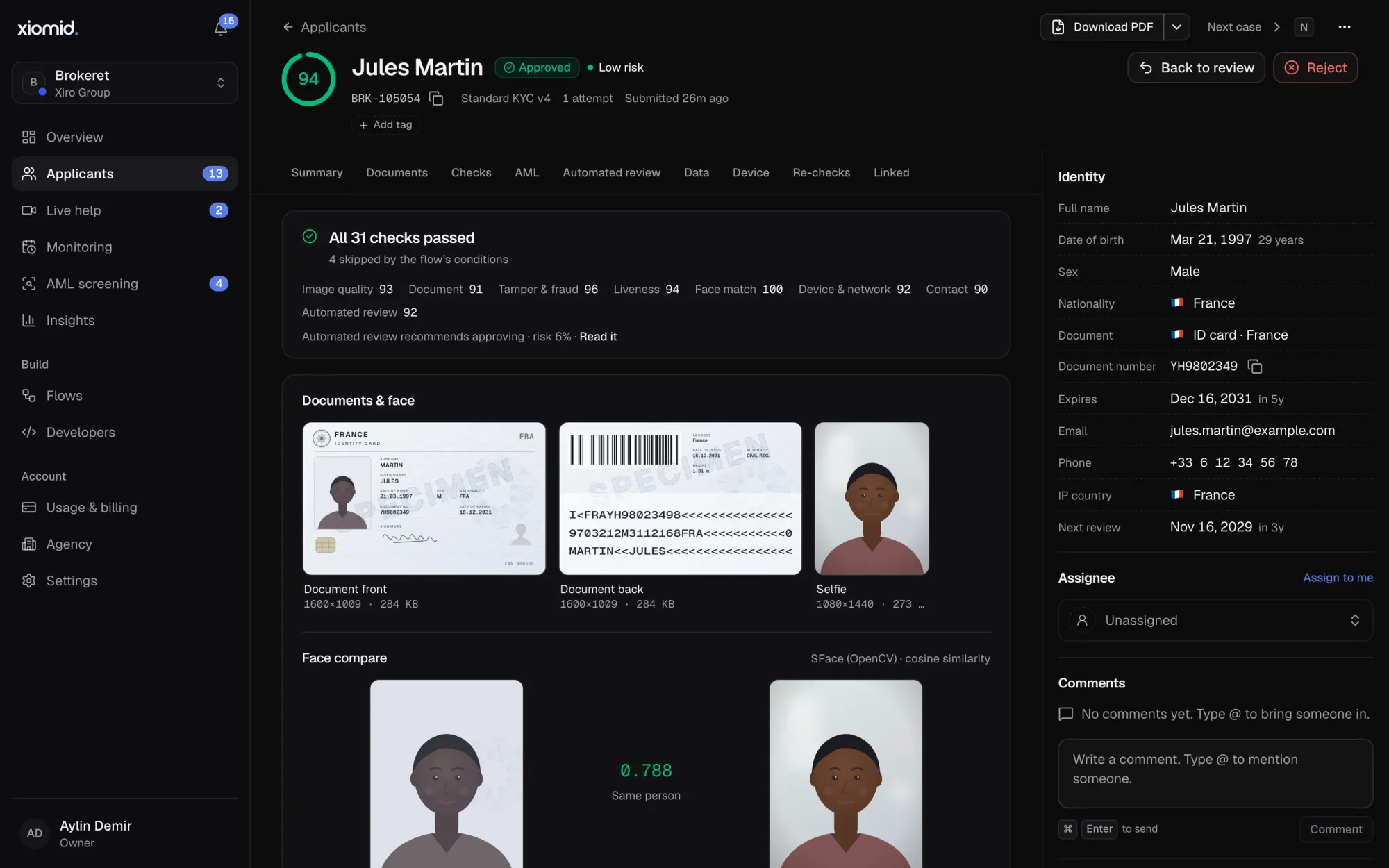
Auditors ask why a customer was approved. The case answers: each check with its score and evidence, the reason codes, the screening coverage, and who decided what, when.
Policies
Privacy Policy
What we collect, how we use it and your rights.
Terms of Service
The terms for using xiomid.
Cookie notice
What this website and the app store on your device.
Security questions?
If your team has a security questionnaire or needs a data processing agreement, or you think you found a security issue, email us.
security@xiomid.comxiomid is owned and operated by PT Brokeret Fintech Solutions. It is the data controller for this website and sign-ups, and the data processor for the verifications it runs for its customers.
Verify your first 500 people free
Every month, on every account. Sign up, build a flow and send your first link in minutes. No card needed to start.